
Benefits of Backwards Compatible Automation for Manufacturers
Backwards compatible automation is defined as the ability of new automation components, software, or control systems to operate correctly with existing legacy hardware and protocols without requiring full system replacement. Manufacturing professionals who have evaluated this approach consistently find it delivers measurable cost savings, reduced downtime, and a clear path to modernization without the disruption of rip-and-replace projects. Over 68% of industrial facilities still rely on legacy communication protocols like Modbus RTU, making backward compatibility not a convenience but a production-critical requirement. The benefits of backwards compatible automation extend well beyond cost avoidance. They shape risk management, sustainability strategy, and workforce continuity across the plant floor.
1. Benefits of backwards compatible automation: Capital savings through hybrid upgrades
The most direct financial advantage of backwards compatible automation is the ability to upgrade selectively. Replacing a single I/O module or communication card costs a fraction of a full PLC overhaul. Hybrid use of tested legacy spares can save up to 70% of capital budget compared to a full system replacement while maintaining uptime. That figure represents real budget that stays in the plant rather than going to an OEM.
Partial upgrades also reduce project risk. A full system replacement introduces untested variables across every control loop simultaneously. A targeted module swap limits the blast radius of any failure to a single subsystem. Decision-makers who have run both approaches consistently report that the hybrid path produces fewer emergency shutdowns and shorter commissioning windows.
- Replace only the components that have reached end of life, not the entire rack
- Source tested, surplus legacy spares to extend the life of proven control hardware
- Prioritize upgrades by failure risk and production impact, not by equipment age alone
- Build a spare parts stockpile for critical modules before they become unavailable
Pro Tip: Before approving any upgrade budget, run a lifecycle awareness audit on your existing control hardware. Knowing which modules are within two years of obsolescence lets you stockpile strategically rather than reactively.
2. Reduced downtime through proven legacy stability
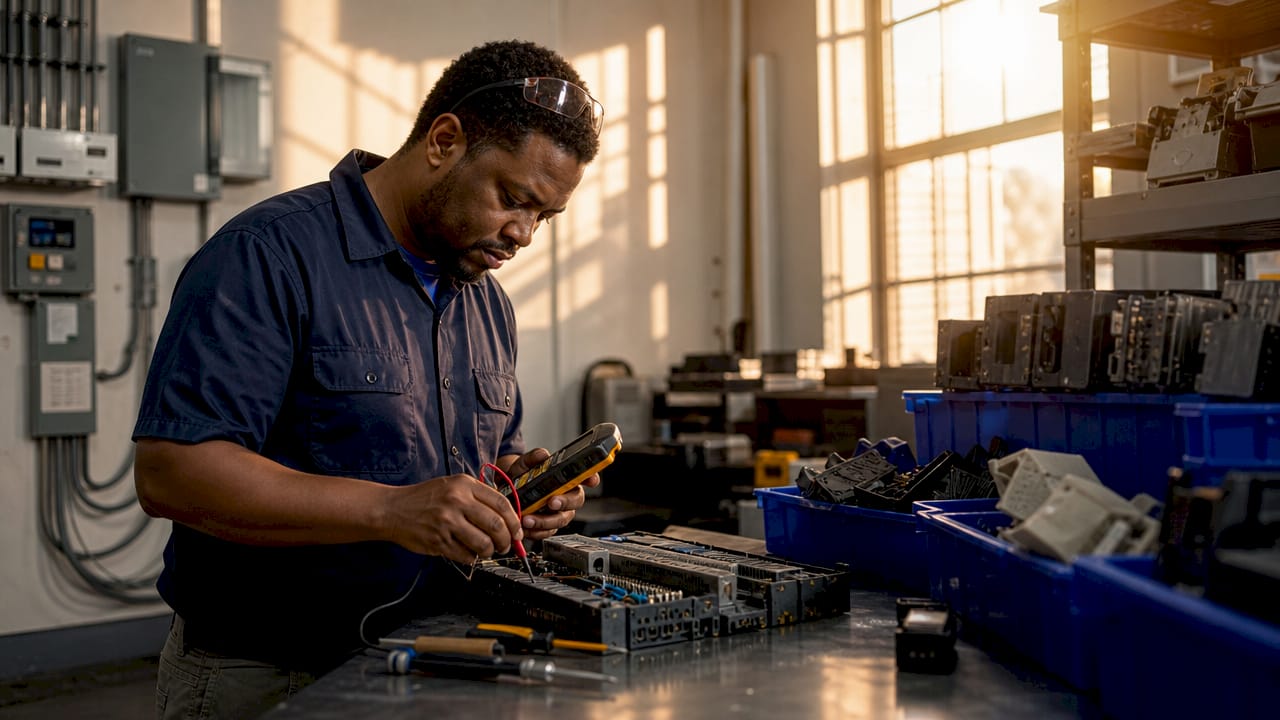
Legacy PLCs provide proven, stable control with near-zero failure rates and service lives measured in decades. That stability is the result of years of tuning, debugging, and operational refinement. Replacing a stable system with an unproven one resets that reliability clock to zero.
Backwards compatibility in automation preserves the control logic that operators and maintenance teams already understand. When a new software layer communicates with an existing GE Fanuc Series 90-30 or Allen-Bradley PLC using the same protocol it has always used, there is no retraining period and no period of elevated failure risk. Production continues while the upgrade happens around the edges of the existing system.
Emergency repair costs are also lower when legacy compatibility is maintained. A plant that can swap a tested surplus module back into service within hours avoids the multi-day lead times that come with sourcing new OEM parts. Industrialpartsusa stocks GE Emerson Genius I/O, RX3i, and Series 90-70 modules specifically to support this kind of rapid response.
3. Connectivity modernization without disruptive overhauls
Backwards compatible automation does not mean freezing a plant in the past. Edge gateways and protocol converters enable legacy industrial hardware to connect to modern IoT, cloud, and analytics platforms without disturbing core operations. The control logic stays on the PLC. The data flows to wherever the analytics team needs it.
This approach is often called “wrap and extend.” The existing PLC handles deterministic control as it always has. A new software layer wraps around it, translating legacy protocols like Modbus RTU or Genius I/O bus into formats that modern SCADA, MES, or cloud platforms can consume. The result is real-time visibility into machine performance without touching the control program.
- Deploy edge gateways at the machine level to capture data from legacy PLCs
- Use protocol converters to translate Modbus RTU, Profibus, or DeviceNet into Ethernet-based formats
- Connect translated data streams to analytics platforms for predictive maintenance insights
- Preserve existing ladder logic and function block programs during the connectivity layer addition
Pro Tip: When adding an edge gateway to a legacy PLC network, verify the gateway supports the exact firmware version of your controller. A mismatch at the firmware level can cause communication dropouts that look like hardware failures.
4. Sustainability and workforce benefits of legacy-compatible systems
Backward compatibility extends machinery lifecycle, reduces electronic waste, and supports sustainability goals by maximizing use of existing resources. Every year a functioning PLC rack stays in service is a year that rack stays out of a landfill. For manufacturers with corporate sustainability commitments, this is a measurable contribution to environmental targets.
The workforce dimension is equally significant. Extending equipment life through backward compatible upgrades reduces training complexity and helps bridge the engineering talent gap. A newer engineer who can interface with a legacy GE Fanuc system through a modern HMI or analytics dashboard does not need to master 30-year-old programming environments from scratch. The familiar front end lowers the learning curve while the legacy system continues to do what it does best.
- Reduced e-waste from fewer full system replacements
- Lower carbon footprint from manufacturing and shipping new control hardware
- Shorter onboarding time for engineers working with modernized legacy interfaces
- Preserved institutional knowledge embedded in existing control programs
5. Best practices for managing backwards compatibility in automation
Maintaining backwards compatibility requires a structured approach, not just good intentions. A rigorous contract-first mindset with stable APIs and observability service level indicators shifts compatibility maintenance from reactive to proactive. Define what each interface must deliver before writing a line of new code. That definition becomes the contract every future update must honor.
Automated test matrices are the enforcement mechanism for those contracts. Every time a firmware update or software patch is released, the test matrix runs against the full range of supported hardware and protocol combinations. Failures surface before deployment, not after a production line goes dark.
Maintaining a compatibility ledger that details firmware versions, SDKs, and supported protocols is critical to avoid connectivity loss within 48 hours of an unvetted update. The ledger is a living document. It maps every component version to every other component it communicates with, so the impact of any proposed change is visible before anyone touches a production system.
| Practice | Purpose | Outcome |
|---|---|---|
| Contract-first API design | Defines stable interface expectations | Prevents regressions from new releases |
| Automated test matrices | Validates compatibility across hardware versions | Catches failures before deployment |
| Compatibility ledger | Maps firmware, SDKs, and protocol versions | Predicts impact of updates before they run |
| Canary deployments | Rolls out changes to a subset of systems first | Limits blast radius of unexpected failures |
| Telemetry monitoring | Tracks real-time system behavior post-update | Detects regressions that tests missed |
Pro Tip: Treat your compatibility ledger as a living document reviewed before every planned update. A manufacturing automation upgrade checklist can serve as the framework for that review process.
6. What are the key benefits of backwards compatible automation for decision-makers?
Backwards compatible automation is a strategic risk management tool that balances innovation with operational stability. Decision-makers evaluating this approach need a clear summary of where the value concentrates.
The financial case is the strongest entry point. Hybrid architectures that preserve legacy control hardware while adding modern connectivity layers deliver capital savings that full replacements cannot match. The automation integration benefits extend across the entire asset lifecycle, from initial upgrade cost through ongoing maintenance and eventual decommissioning.
Operational stability is the second pillar. A plant running on proven legacy control logic with a modern data layer on top has the best of both worlds. The deterministic control that PLCs deliver is not replicated by newer, software-defined systems in many critical applications. Preserving that control layer while adding visibility is the definition of a well-executed hybrid architecture.
- Cost efficiency: Hybrid upgrades save up to 70% of capital expenditure compared to full replacements
- Reduced downtime: Legacy-compatible swaps restore production faster than OEM lead times allow
- Operational stability: Proven control logic continues running while new layers add capability
- Gradual modernization: Incremental upgrades reduce project risk and spread capital investment over time
- Sustainability gains: Extended equipment lifecycle reduces e-waste and supports environmental targets
- Workforce enablement: Modern interfaces on legacy systems lower training costs and ease talent transitions
- Long-term ROI: Avoiding premature replacement preserves the value embedded in existing control programs
For manufacturers evaluating where to start, the answer is almost always the same. Audit existing assets for lifecycle risk, identify the modules closest to obsolescence, and source tested surplus replacements before they become unavailable. That sequence protects production continuity while building the foundation for a broader modernization program.
Key Takeaways
Backwards compatible automation delivers its greatest value when manufacturers treat it as a long-term strategy rather than a short-term cost-cutting measure.
| Point | Details |
|---|---|
| Capital savings are immediate | Hybrid upgrades using tested legacy spares save up to 70% of capital budget vs. full replacement. |
| Legacy stability protects uptime | Proven PLC control logic runs reliably for decades, reducing unplanned downtime risk. |
| Connectivity is addable without disruption | Edge gateways and protocol converters connect legacy hardware to modern platforms without touching control logic. |
| Compatibility requires active management | A compatibility ledger and automated test matrices prevent update-driven failures before they reach production. |
| Sustainability and workforce gains are real | Extended equipment lifecycle reduces e-waste and lowers training costs for newer engineers. |
Why backwards compatibility deserves a seat at the strategy table
Most modernization conversations start with what is new. New platforms, new architectures, new vendors. The backwards compatibility conversation starts with what is working. That shift in framing changes everything about how a plant approaches its upgrade roadmap.
I have watched manufacturers spend significant capital replacing control systems that had years of reliable service left in them. The driver was almost always the same: a new software platform that did not support the existing hardware, combined with a vendor who had every incentive to sell a full replacement. The result was a commissioning process that took twice as long as projected and a production team that spent months relearning a system that was functionally identical to the one they already knew.
The plants that get this right treat backwards compatibility as a design requirement, not an afterthought. They define what their legacy systems must continue to do before evaluating any new technology. They source tested surplus modules to extend the life of proven hardware. They add connectivity layers incrementally, validating each addition before moving to the next. That approach is slower on paper. In practice, it produces fewer surprises and better long-term outcomes.
The engineering talent gap makes this even more pressing. Experienced PLC programmers who know GE Fanuc Series 90-30 or Allen-Bradley SLC 500 inside and out are retiring. The engineers replacing them are more comfortable with modern tools. Backwards compatible systems let those newer engineers work in familiar environments while the underlying control logic continues to run exactly as it was designed. That is not a compromise. That is good engineering.
— Monica
Automation parts and legacy system support at Industrialpartsusa
Manufacturing teams running legacy control systems need a reliable source for tested, compatible components. Industrialpartsusa stocks new, surplus, and remanufactured automation parts across GE Emerson Genius I/O, RX3i, Series 90-30, Allen-Bradley PLCs, Mitsubishi, Omron, and more. Every part ships with a one-year warranty backed by in-house testing and repair.
Whether you need a single replacement module or a broader inventory of legacy automation components to support a hybrid upgrade strategy, Industrialpartsusa offers same-day shipping on in-stock items and direct support for worldwide manufacturing clients. Visit Industrialpartsusa to search inventory, request a quote, or consult with the team on sourcing hard-to-find parts for your specific control platform.
FAQ
What is backwards compatible automation?
Backwards compatible automation is the ability of new automation software or hardware to work correctly with existing legacy systems and protocols. It allows manufacturers to upgrade incrementally without replacing entire control architectures.
How much can backwards compatible upgrades save compared to full replacements?
Hybrid use of tested legacy spares can save up to 70% of capital expenditure compared to a full system overhaul. That saving applies while maintaining production uptime throughout the upgrade process.
Why do so many plants still rely on legacy communication protocols?
Over 68% of industrial facilities rely on legacy protocols like Modbus RTU because those protocols are deeply embedded in proven, stable control systems. Replacing them requires replacing the hardware and software that depend on them, which carries significant cost and risk.
What is a compatibility ledger and why does it matter?
A compatibility ledger is a document that maps firmware versions, SDKs, and supported protocols across all connected systems. Maintaining one prevents connectivity failures that can occur within 48 hours of an unvetted software or firmware update.
How does backwards compatible automation support sustainability goals?
Extending equipment lifecycle through backward compatible upgrades reduces electronic waste and lowers the environmental cost of manufacturing new control hardware. For manufacturers with corporate sustainability targets, this is a direct and measurable contribution.