
How to Evaluate Automation Parts for Resale Quality
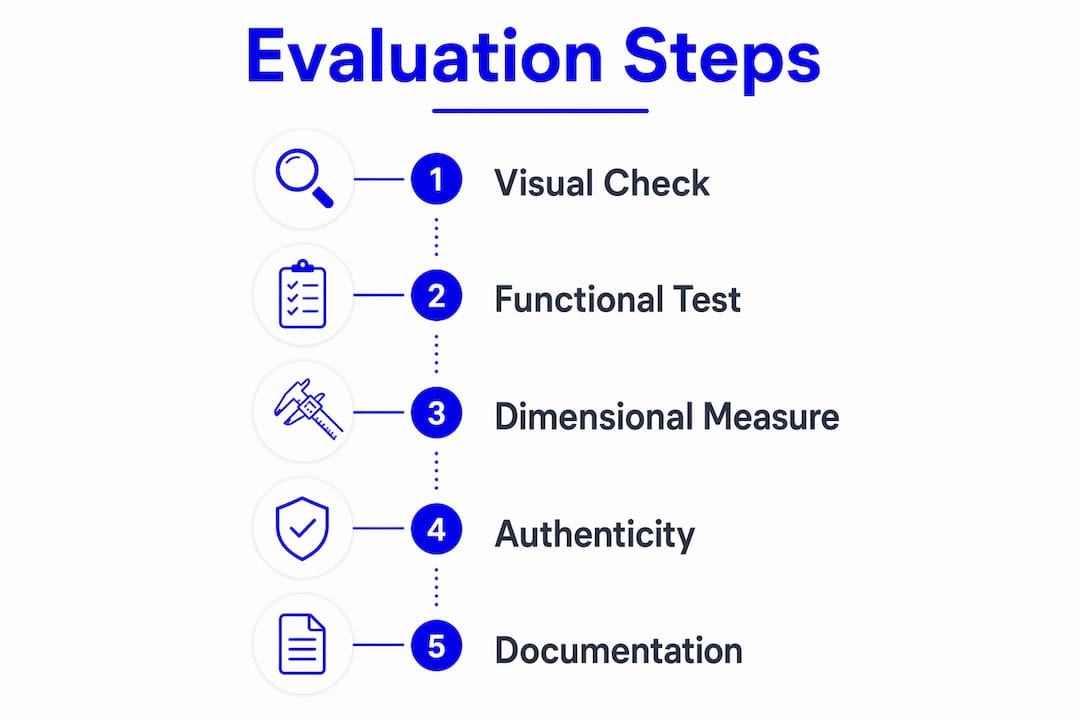
Resale quality evaluation for automation parts is a structured grading process that combines visual inspection, functional testing, dimensional measurement, and provenance verification to confirm a component’s reliability and market value. The industry term for this process is condition assessment, and it applies whether you are grading a GE Fanuc Series 90-30 CPU, an Allen-Bradley PLC module, or a surplus ABB variable frequency drive. A four-step grading rubric covering visual, functional, dimensional, and authenticity checks is the recognized standard for defensible resale grading. For legacy and hard-to-find components, skipping any one of these steps creates pricing risk, return liability, and buyer distrust that no warranty can fully repair.
What are the essential criteria to evaluate automation parts for resale quality?
The four pillars of resale-quality assessment are physical condition, electrical functionality, dimensional accuracy, and authenticity. Each pillar answers a different question a buyer will eventually ask, and each requires a different set of tools and documentation.
Visual inspection: the first filter
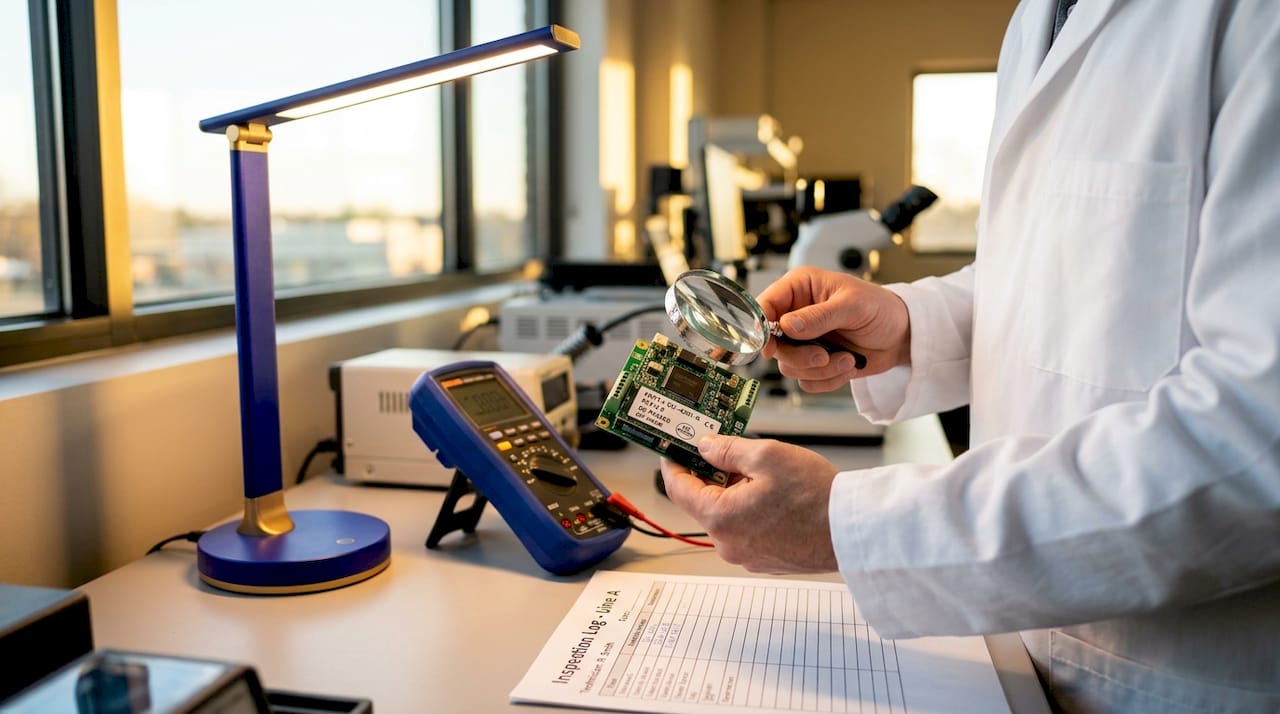
Visual inspection is the fastest way to eliminate parts that cannot pass any further testing. Check every surface for scratches, dents, corrosion, burn marks, and cracked housings. On PCB-based modules such as GE Fanuc RX3i or Omron CJ-series cards, look for lifted traces, corroded connector pins, and evidence of prior rework. Label integrity matters too: missing or defaced manufacturer markings are a red flag for counterfeit risk and will complicate authenticity verification later. Photograph every defect before proceeding.
Electrical and functional testing
Electrical verification including continuity checks and signal integrity tests improves confidence in failure-risk prediction before a part reaches a buyer. For PLC I/O modules, test each channel individually. For servo drives and variable frequency drives, verify input/output voltage ranges, check for blown fuses, and confirm that the unit powers up without fault codes. Functional testing under load, even a brief bench test, separates parts that pass visual inspection from parts that actually work.
Dimensional measurement
Dimensional accuracy matters most for mechanical components: mounting brackets, servo motor flanges, and connector housings. Measure critical dimensions against OEM specifications using calipers or a coordinate measuring machine. Small deviations from OEM tolerances can cause safety risks and downstream damage, which is why verifying tested parts against published tolerances is non-negotiable for resale.
Authenticity verification
- Confirm manufacturer stamps, part numbers, and date codes match the component’s stated origin.
- Cross-reference serial numbers against known manufacturer databases or provenance documentation from the original facility.
- Inspect for signs of remarking: inconsistent font depth, misaligned labels, or paint overspray around engraved text.
- Request and retain any original purchase orders, shipping manifests, or decommissioning records that establish chain of custody.
Pro Tip: When evaluating GE Fanuc or Allen-Bradley modules from surplus lots, photograph the serial number plate under raking light. Remarked counterfeits often show shallow engraving or adhesive residue that flat lighting conceals.
How to perform functional and electrical tests before resale
Functional testing is where latent faults surface. A part can look perfect and still carry a fault that only appears under operating conditions. For legacy automation components, control system checks such as PLC alarm history reviews and parameter backups are as important as any hardware inspection. Configuration artifacts often carry the fault, not the physical board.
Follow this sequence for a thorough functional evaluation:
- Power-on test. Apply rated voltage and confirm the unit initializes without fault codes or error LEDs. Record the startup sequence for documentation.
- Parameter and alarm history review. For legacy PLCs and CNC controllers, retrieve stored alarm logs and parameter files. Repeated fault codes for the same axis or channel indicate a recurring hardware problem that bench appearance will not reveal.
- Signal integrity check. Use an oscilloscope or signal analyzer to verify that analog and digital outputs match expected waveforms and voltage levels under simulated load.
- Operational run test. Where practical, run the component through a representative duty cycle. For servo drives, command a motion profile. For I/O modules, cycle all channels through their full range.
- Hour meter and wear indicator review. Servo drives and variable frequency drives often log operating hours internally. High hour counts do not automatically disqualify a part, but they must be disclosed and factored into the resale grade and price.
Pro Tip: For GE Fanuc Series 90-70 and RX7i racks, always back up the CPU parameters before powering down. A corrupted parameter set after testing can make a functional board appear defective to the next buyer. Use the aging automation audit checklist as a reference for legacy-specific checks.
Why authenticity, provenance, and documentation matter for resale
Counterfeit automation components are a documented problem in the surplus market, and the consequences extend beyond a failed transaction. Installing a counterfeit Allen-Bradley or Mitsubishi module in a production line can cause unplanned downtime, safety incidents, and warranty voidance on the host system. Provenance and authenticity verification using manufacturer stamps and documented chain of custody directly reduces this risk and supports defensible resale grading.
The documentation package for a properly graded part should include:
- A condition report with photographs, measurements, and any noted discrepancies
- Copies of serial number records and any available OEM traceability data
- Test results from functional and electrical evaluations, with dates and technician sign-off
- Provenance records: original purchase orders, decommissioning certificates, or transfer documents
Systematic condition reports enable consistent pricing, support warranty claims, and give buyers the confidence to approve purchases without an in-person inspection. Porsche applies this principle at scale, storing inspection image data for up to three years to link a component’s condition at production time to any future dispute. For resellers of legacy automation parts, maintaining time-stamped records over the life of a part achieves the same traceability benefit.
| Documentation element | Purpose in resale grading |
|---|---|
| Condition report with photos | Provides visual evidence of state at time of sale |
| Serial number and OEM traceability | Confirms authenticity and prevents counterfeit disputes |
| Functional test results | Demonstrates operational performance before buyer receives the part |
| Provenance records | Establishes chain of custody and supports warranty claims |
How OEM recertification and remanufacturing influence resale value
OEM recertification sets the quality ceiling for resale-grade automation parts. FANUC’s recertification process restores robots to original factory specs through full inspection, repair, validation, and a one-year warranty with on-site service. That standard defines what buyers expect when they pay a premium for recertified components. Non-OEM resellers who want to compete on quality must match the process controls, even if they cannot match the OEM label.
Factory-qualified remanufacturing uses genuine OEM parts, factory-trained technicians, and specified test equipment to achieve consistent OEM-level performance. The differentiator is not the word “refurbished” on a label. It is the combination of authentic components, documented test procedures, and technician training that produces repeatable results.
| Remanufacturing type | Parts used | Test equipment | Warranty basis | Buyer risk |
|---|---|---|---|---|
| OEM recertification (e.g., FANUC) | Genuine OEM | OEM-specified | Manufacturer warranty | Lowest |
| Factory-qualified remanufacturer | Genuine OEM | OEM-specified | Remanufacturer warranty | Low |
| Non-qualified third-party repair | Mixed or aftermarket | General bench tools | Seller warranty only | Higher |
For resellers sourcing discontinued automation parts, the practical takeaway is this: document your test procedures to the same standard an OEM would apply, use genuine replacement components where repairs are needed, and back the result with a written warranty. That combination closes most of the gap between OEM recertification and independent resale grading.
What role does automated inspection technology play in resale quality assessment?
Automated inspection systems, particularly AI-driven vision platforms, are changing the speed and consistency of defect detection for high-volume resellers. UnitX’s AI-driven inspection for automotive pump housings reports 0% false acceptance for safety defects and no more than 0.5% false acceptance for cosmetic flaws. That level of precision is difficult to replicate with manual inspection alone, especially for complex geometries like servo motor housings or connector arrays.
For resellers evaluating automation components at scale, the practical benefits of automated inspection include:
- Consistent defect detection across shifts and inspectors, eliminating human fatigue as a variable
- Automated image capture that creates a permanent visual record for every part inspected
- Configurable acceptance thresholds that can be tuned to prioritize zero tolerance for safety-critical defects while allowing controlled acceptance of minor cosmetic variation
- Faster throughput on high-volume surplus lots, reducing per-unit evaluation cost
Implementing automated inspection works best with a staged pilot approach: start with one product line, gather representative defect samples, validate detection accuracy, and measure return on investment before scaling. For most independent resellers, full AI inspection is a longer-term investment. The near-term application is using vision-assisted tools for specific high-value part families where manual inspection is slow or inconsistent, such as PCB surface inspection on GE Fanuc or Allen-Bradley modules.
Automated inspection systems must actively manage false acceptance and false rejection rates. A threshold set too tight generates excessive scrap from good parts. A threshold set too loose allows defective parts to reach buyers. Calibrating that balance is the core engineering challenge when deploying these systems for resale-quality grading.
Key takeaways
Reliable resale quality for automation parts requires combining visual, functional, dimensional, and provenance checks with documented test records that support warranties and dispute resolution.
| Point | Details |
|---|---|
| Use a four-step grading rubric | Visual, functional, dimensional, and authenticity checks form the recognized standard for defensible resale grading. |
| Prioritize software and parameter checks for legacy parts | Alarm logs and parameter backups reveal latent faults that hardware inspection alone will miss. |
| Document every evaluation step | Time-stamped condition reports, photos, and test results support warranties and prevent counterfeit disputes. |
| Match OEM process controls where possible | Using genuine components and documented test procedures closes the quality gap between OEM recertification and independent resale. |
| Tune automated inspection thresholds carefully | Zero false acceptance for safety defects and controlled tolerance for cosmetic flaws optimizes yield and buyer confidence. |
What I have learned from evaluating legacy parts at scale
After years of working through surplus lots of GE Fanuc Series 90-30 CPUs, Allen-Bradley SLC 500 modules, and ABB drives, the single most consistent mistake I see is treating hardware inspection as the complete evaluation. It is not. The hardware can look perfect and the part can still be unusable because a previous technician corrupted the parameter set, or because the alarm log shows 47 instances of the same overcurrent fault that nobody cleared before decommissioning.
The parts that generate returns and disputes are almost never the ones with visible damage. They are the ones that passed a quick visual check and nothing else. Combining a thorough hardware inspection with a software and parameter audit takes more time per unit, but it cuts return rates significantly and protects your reputation with repeat buyers.
The other lesson is documentation discipline. When a buyer disputes a part six months after purchase, a photograph taken at the time of evaluation is worth more than any verbal assurance. I now treat every evaluation as if the documentation will eventually be reviewed by someone who was not present. That mindset changes how thoroughly you record measurements, test results, and observed anomalies. It also makes pricing conversations much easier, because you can show exactly what was checked and what was found.
For resellers working with truly obsolete components where OEM documentation no longer exists, the industrial drive system basics reference is a useful supplement for understanding tolerance ranges and electrical parameters when manufacturer specs are unavailable.
— Monica
Source your next legacy part with confidence from Industrialpartsusa
Industrialpartsusa specializes in exactly the parts that are hardest to evaluate and hardest to find: legacy GE Fanuc Series 90-30, RX3i, and RX7i modules, Allen-Bradley PLCs, Mitsubishi and Omron controllers, and surplus variable frequency drives and servo motors from brands that no longer support the product line. Every part goes through in-house testing, cleaning, and inspection before it ships, and each comes backed by a one-year warranty from Global Electrical and Industrial. If you are sourcing components for a production line that cannot afford a bad part, visit Industrialpartsusa to browse in-stock inventory with same-day shipping. You can also sell your surplus parts directly through the platform if you have evaluated stock ready to move.
FAQ
What does it mean to evaluate automation parts for resale quality?
Resale quality evaluation is a structured condition assessment combining visual inspection, functional testing, dimensional measurement, and authenticity verification. The goal is to assign a defensible grade that reflects the part’s actual reliability and market value.
How do I check if a legacy PLC module is functional before resale?
Power the module on and review alarm history and parameter logs before running any channel tests. Legacy control system checks including parameter backups and fault code reviews reveal latent issues that visual inspection alone will not catch.
Why does documentation matter when grading automation parts for resale?
Documented condition reports, test results, and provenance records support warranty claims and dispute resolution. Buyers purchasing legacy or hard-to-find components rely on this evidence to approve purchases without an in-person inspection.
What is the difference between OEM recertification and third-party remanufacturing?
OEM recertification, such as FANUC’s program, restores a component to original factory specifications with a manufacturer-backed warranty. Third-party remanufacturing quality depends entirely on whether the remanufacturer uses genuine OEM parts, factory-trained technicians, and specified test equipment.
Can automated inspection replace manual evaluation for surplus automation parts?
Automated AI inspection improves consistency and throughput but works best as a supplement to manual evaluation, not a replacement. A staged pilot approach starting with one product line is recommended before scaling, and thresholds must be tuned to balance defect detection against false rejection rates.